
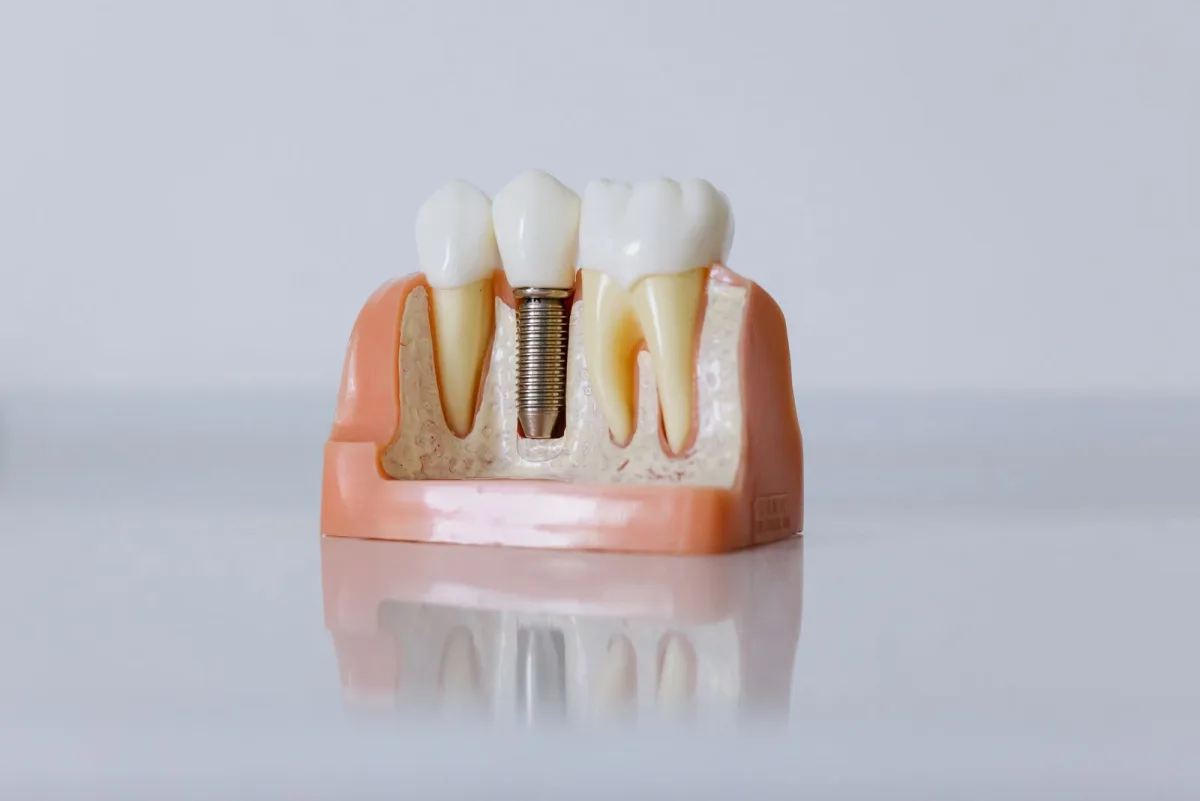

It usually happens over something ordinary. A popcorn kernel, an olive pit, a bite of crusty bread, and suddenly your tongue finds a rough edge that was not there this morning. A chipped or cracked tooth often does not hurt much at first, so it is tempting to wait and see. This guide explains what to look for, why cracks tend to grow instead of settling, and why a small repair now is often simpler than a crown later. If you are in Denver and a tooth just feels off, it is worth a read before you decide to leave it alone.
Chipped Tooth or Cracked Tooth: What Is the Difference?
The two get lumped together, but they behave differently.
A chip is a piece of enamel that has broken away, usually from an edge or a corner. You can often see it or feel it with your tongue. Small chips are frequently cosmetic, though a sharp edge can irritate your tongue or cheek, and a larger chip can expose the more sensitive layer underneath.
A crack is a fracture line running into the tooth. Some are tiny surface lines in the enamel, called craze lines, which are common in adult teeth and usually harmless. Others run deeper, through the enamel into the dentin and sometimes toward the nerve. Deeper cracks are often invisible to the eye and do not always show clearly on X-rays, which is a big part of why they get missed.
Signs of a Chipped or Cracked Tooth
- A sharp edge or rough spot you can feel with your tongue
- A quick, sharp pain when you bite down, especially as you release the bite
- Sensitivity to cold, heat, or sweets in one specific tooth
- Pain that comes and goes instead of a steady ache
- Food catching in a spot where it never used to
- Swelling or tenderness in the gum around one tooth
Pain on release is one of the classic signs of a cracked tooth. If one tooth keeps giving you a jolt when you chew, mention it, even if it settles down in between.
Why Cracks Tend to Spread
A broken bone can knit itself back together. A tooth cannot. Once enamel and dentin crack, your body has no way to close the line, so the crack either stays as it is or grows.
A few everyday things push it toward growing:
- Chewing. Every bite flexes the tooth slightly, and a crack can open and close a little each time. Over thousands of bites, that adds up.
- Temperature swings. Hot coffee followed by ice water makes the tooth expand and contract.
- Clenching and grinding. Heavy nighttime pressure is hard on a tooth that is already weakened. We cover that connection in our post on teeth grinding and night guards.
- Bacteria. A crack gives bacteria a path into the tooth. That can lead to decay along the line or, if it reaches the nerve, an infection.
None of this runs on a fixed schedule. Some cracks stay stable for years and others move quickly. The trouble is that you cannot tell which kind you have from the outside, and the repair options narrow as a crack gets deeper.
How a Chipped or Cracked Tooth Is Repaired
The right repair depends on how much of the tooth is affected and how deep the damage goes. Dr. Yang starts with a careful exam and imaging when it is needed to find the crack and judge its depth. You can read more about that process on our cracked tooth repair page. In general, the options run from smallest to largest:
Smoothing
A very small chip on an edge can sometimes be polished smooth so it no longer feels sharp. No filling material is needed.
Dental Bonding
For small to moderate chips, especially on front teeth, dental bonding rebuilds the missing piece with tooth colored composite resin. It is shaped to match the tooth, hardened with a curing light, and polished, usually in one visit and with little preparation of the healthy tooth. Bonding can also be used to repair some minor cracks.
Fillings
When a piece has broken off a back tooth, or a chip or crack has let decay start, a tooth colored filling may be enough to restore it. Like bonding, this is often done in a single appointment.
Crowns
If a crack runs deeper, or a large part of the tooth has broken away, a filling may not be strong enough to keep the tooth from splitting further. A porcelain crown covers the whole tooth and holds it together. Crowns are a dependable repair, but they involve reshaping more of your natural tooth and usually take more than one visit.
Root Canal Treatment
When a crack reaches the pulp, the soft tissue in the center of the tooth, that tissue can become inflamed or infected. A root canal removes the damaged tissue so the tooth can be kept, and a crown is then placed to protect it.
When a Tooth Cannot Be Saved
A crack that splits the tooth in two, or runs well below the gumline, can mean the tooth has to be removed. Replacing a missing tooth is possible, but it is a longer and larger process than any repair above. This is the outcome early treatment is meant to help you avoid.
Why a Small Fix Now Usually Beats a Crown Later
The pattern is fairly simple. The earlier a chip or crack is treated, the more of your natural tooth stays in place and the smaller the repair tends to be. Bonding or a filling is often one straightforward visit. A crown means more reshaping, more time in the chair, and usually a higher cost. A root canal adds another step on top of that.
Waiting does not guarantee a crack will get worse. What it does is take away the chance to fix it while it is still small, and that is a trade most people would not choose if they saw it laid out ahead of time.
What to Do Right After You Chip or Crack a Tooth
- Rinse your mouth gently with warm water
- If a piece broke off, save it and bring it with you
- Cover a sharp edge with dental wax or sugar free gum to protect your tongue and cheek
- Hold a cold compress on your cheek if there is swelling
- Chew on the other side and skip very hard, sticky, hot, or cold foods until it is checked
- Take an over the counter pain reliever as directed on the label if you need one
Call us right away if you have severe pain, swelling in your face or gums, a large piece of tooth missing, or bleeding that will not stop. Those situations should not wait for a routine appointment.
Lowering the Odds of Another Chip
- Skip chewing ice, pens, and hard candy
- Use scissors, not your teeth, to open packages
- Wear a mouth guard for contact sports and other activities where a fall or impact is likely
- Keep up with checkups so old fillings that are starting to break down can be replaced before the tooth around them gives way
Frequently Asked Questions
Is a chipped tooth an emergency?
Usually not, if there is no severe pain or swelling. A small chip can generally wait a few days for an appointment. Severe pain, facial or gum swelling, a large broken piece, or bleeding that will not stop should be seen as soon as possible.
Can a cracked tooth be fixed with bonding instead of a crown?
Sometimes. Small chips and minor cracks can often be repaired with bonding. Deeper cracks, or cracks in back teeth that take heavy chewing pressure, often need a crown to keep the tooth from splitting. An exam is the only way to know which applies to you.
Why does my tooth only hurt when I bite down?
Pain that shows up when you bite, and especially when you let go, is a common sign of a cracked tooth. The crack can flex slightly under pressure and irritate the inner part of the tooth. It is worth having it checked even if the pain comes and goes.
Will a chipped tooth get worse if I leave it?
Not always, but it can. A chipped edge can keep breaking under normal chewing, and a crack can deepen over time. Teeth do not repair themselves, so the options tend to be simplest when the damage is new.
Think You Might Have a Chipped or Cracked Tooth?
If a tooth feels rough, sharp, or sore when you bite, it is easier to fix now than after it has had months to grow. Book an appointment with Dr. Jane Yang DDS or call (303) 722-2686, and we will take a careful look and talk you through the simplest repair that will hold.